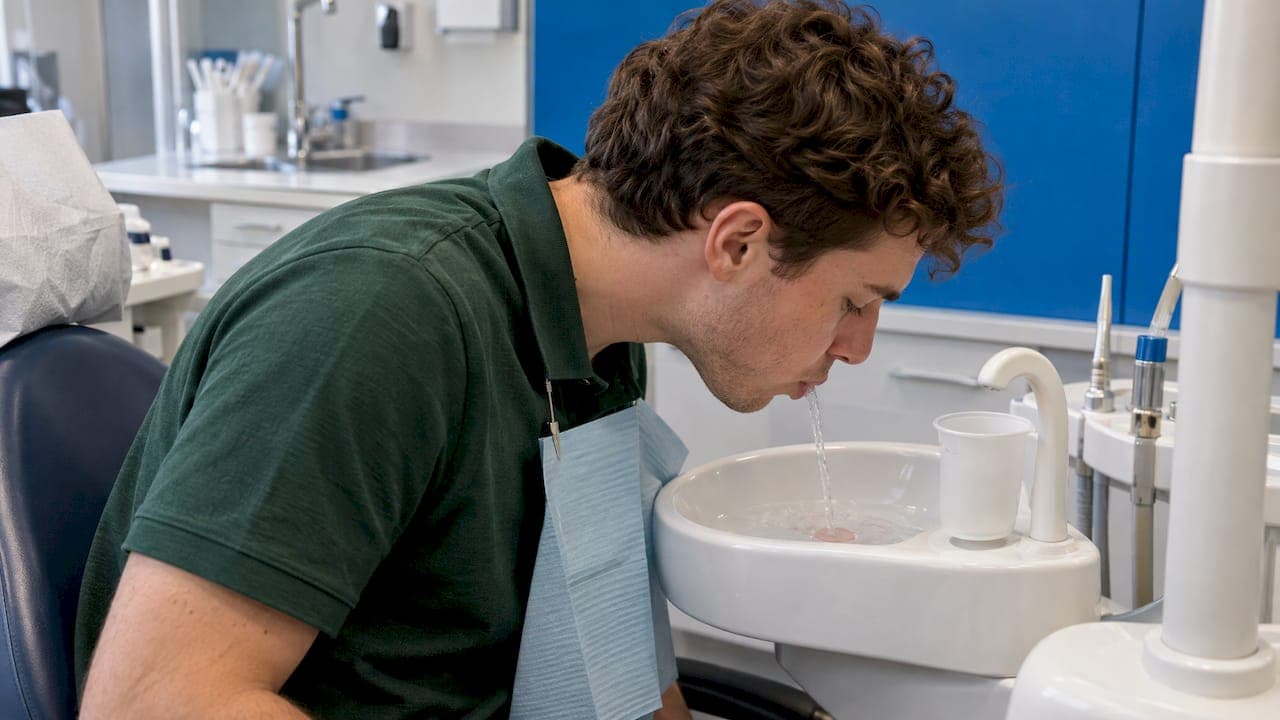
A little bleeding and soreness after a dental cleaning is common, and it usually fades within a few days. Bleeding that is heavy, keeps going for weeks or comes with other symptoms is a reason to call your dentist. Below you'll find what's typical, how long each type of cleaning takes to settle, what to do at home and the signs that mean you need a check-up.
TL;DR
- Mild bleeding and tender gums for 24 to 48 hours after a routine cleaning are common, especially if your gums were inflamed before the visit.
- After a deep cleaning, gums may be swollen, tender and bleed, with pain for a day or two and sensitivity for up to a week.
- Brush gently with a soft brush, rinse with warm salt water and keep cleaning between your teeth once the first day has passed.
- Bleeding that is heavy, lasts beyond the expected healing window or comes with other unexplained symptoms needs a dentist's evaluation.
Table of Contents
- Is it normal for gums to bleed after a cleaning?
- Why your gums bleed and feel sore after a cleaning
- How long bleeding and soreness last
- Routine cleaning versus deep cleaning
- How to calm sore gums and stop bleeding at home
- When to call your dentist
- Our perspective
- Keeping your gums from bleeding after the next cleaning
- Bleeding gums that won't settle? Come see us in Kennebunk
- FAQ
- Sources
Is it normal for gums to bleed after a cleaning?
Yes, in most cases. Gums that are inflamed bleed easily when anything touches them, and a cleaning touches every gumline in your mouth. Slight bleeding and soreness while brushing can show up for 24 to 48 hours after a cleaning, according to dental professionals writing in Perio Implant Advisory.
The more inflamed your gums were going in, the more you'll notice. A Harvard Health article quotes a dentist explaining that the more extensive the gum inflammation, the longer the tissue may need to recover, up to two weeks after a routine cleaning.
That is also why people who haven't had a cleaning in a while, or who skip flossing, tend to bleed more. Bleeding is not a sign that the hygienist did something wrong. It is usually a sign that the gums needed attention.
What counts as normal:
- Pink-tinged saliva or a little blood on your toothbrush or floss.
- Gums that feel tender, puffy or tight when you brush.
- Bleeding that gets lighter each day.
What doesn't: bleeding that is getting heavier, bleeding that won't stop with light pressure, or bleeding that is still going weeks later. We cover those below.
Why your gums bleed and feel sore after a cleaning
The main cause of bleeding gums is plaque along the gumline. MedlinePlus lists plaque buildup as the leading cause and notes that plaque can harden into tartar and contribute to gingivitis and periodontitis.
Here is what happens during your visit:
- Plaque and tartar that were sitting at and under the gumline get removed.
- The gum tissue that was inflamed is now directly exposed to instruments and floss.
- Inflamed tissue has more fragile, engorged blood vessels, so it bleeds and feels sore.
- Once the irritant is gone, the body starts to heal and the swelling goes down.
The National Institute on Aging explains that gingivitis can make gums red, tender and more likely to bleed, while periodontitis can cause sore, bleeding gums, painful chewing and eventually tooth loss. So soreness after a cleaning is often the first visible clue that gum inflammation was already there.
Other reasons you may feel it more:
- A long gap since your last cleaning. More buildup means more tissue to clean around.
- Hard brushing or flossing right before the visit. Some people scrub extra hard to prepare. That can irritate gums further.
- Residual tartar or deeper pockets. Dental professionals note that bleeding beyond the normal window can reflect leftover calculus, ongoing plaque inflammation, pocket depth, anatomy or medical conditions.
How long bleeding and soreness last
The timeline depends on the type of cleaning and how inflamed your gums were. These are the ranges the health sources give:
| Situation | What to expect | Source |
|---|---|---|
| Routine cleaning, mild inflammation | Slight bleeding and soreness for 24 to 48 hours | Perio Implant Advisory |
| Routine cleaning, extensive gum inflammation | Tissues may need up to two weeks to recover | Harvard Health |
| Cleaning for gingivitis | Bleeding and tenderness should lessen within one to two weeks with good home care | MedlinePlus |
| Deep cleaning (scaling and root planing) | Pain for a day or two, tooth sensitivity up to a week | ADA MouthHealthy |
| Treatment for periodontitis | Bleeding and tenderness should go away within three to four weeks | MedlinePlus |
Full gum healing after a deep cleaning can take longer. Colgate's U.S. oral health guidance puts it at four to six weeks, even though the worst of the discomfort passes in the first days.
The pattern to look for is improvement. Each day should feel a little better than the last. If it doesn't, that is your cue to call.

Routine cleaning versus deep cleaning
The two feel different afterward, so it helps to know which one you had.
A routine cleaning (prophylaxis) removes plaque and tartar from above the gumline and just below it. It is meant for people whose gums are generally healthy or have mild gingivitis. Afterward you may notice a little bleeding when you brush that night or the next morning.
A deep cleaning, called scaling and root planing, goes below the gumline. The American Dental Association explains that scaling removes plaque and tartar, and root planing smooths the roots so the gums can reattach. It is used to treat gum disease, so the tissue being treated is already inflamed. That is why the ADA notes gums may be swollen, tender and bleed afterward.

So if you're asking whether it's normal to still bleed after a deep cleaning, the answer is yes, some bleeding is expected in the first days. Often the numbing wears off first, then the tenderness shows up, and by the end of the first week things calm down. If you want to read the day-by-day version, our guide to deep cleaning aftercare walks through the first 72 hours and the weeks after.
The ADA also says to attend your scheduled follow-up so the dentist can assess healing and remeasure the gum pockets. Deeper pockets may need additional treatment. Skipping that visit is one of the easiest ways to end up with bleeding that never quite resolves.
How to calm sore gums and stop bleeding at home
Most of what helps is simple and gentle. Here is a sequence you can follow.
- Apply light pressure if it is actively bleeding. Hold a clean, damp piece of gauze against the area for several minutes. Don't keep rinsing and spitting, which can keep it going.
- Keep brushing, but gently. MedlinePlus recommends a soft-bristle toothbrush at least twice a day. Stopping brushing altogether lets plaque build back up, which prolongs bleeding. Use light pressure and small circles along the gumline.
- Rinse with warm salt water. Harvard Health suggests warm salt-water rinses twice daily for sensitive gums after a routine cleaning. MedlinePlus adds that warm salt water or antibacterial rinses can reduce gum swelling.
- Be careful with mouthwash. MedlinePlus says a dentist may recommend salt-water, diluted hydrogen peroxide or anti-inflammatory rinses, but that alcohol-containing rinses should be discussed with your dentist. If you were prescribed a rinse, use it exactly as directed.
- Take an over-the-counter pain reliever if needed. Harvard Health mentions acetaminophen or ibuprofen when medically appropriate. If you have a condition or take a medication that makes these unsuitable, such as blood thinners, kidney disease or stomach ulcers, ask your doctor or pharmacist first.
- Eat soft foods at first. After a deep cleaning, Colgate advises soft foods initially. Avoid crunchy chips, hard crusts and very hot drinks for a day or two.
- Resume flossing after about a day. After a deep cleaning, Colgate suggests waiting roughly 24 hours before flossing or using interdental cleaners, then easing back in. After a routine cleaning, you can generally keep flossing, just gently.
The one thing not to do is stop cleaning between your teeth for good. Bleeding gums that are cleaned daily usually tighten up and stop bleeding. Gums that are left alone usually don't. Our post on speeding up dental treatment recovery has more everyday tips.
When to call your dentist
Call if you notice any of the following:
- Bleeding that is severe or won't slow down with several minutes of gentle pressure.
- Bleeding that continues past the expected window. MedlinePlus advises a dental or medical consultation when bleeding is severe or chronic, continues after treatment, or occurs with other unexplained symptoms.
- Soreness that gets worse instead of better after the first few days.
- Swelling, a bad taste, pus or a fever. These can point to an infection and shouldn't wait.
- Bleeding every time you brush or floss. The National Institute on Aging says to see a dentist if brushing or flossing causes gum bleeding or mouth pain.
Dental professionals also stress that persistent bleeding should be evaluated rather than simply treated with repeated cleanings. If the cause is deeper pockets or leftover tartar, another routine polish won't fix it. It needs a proper assessment.
If you're pregnant and your gums bleed, see our article on bleeding gums in pregnancy. If you have a bleeding disorder or take blood thinners, tell your dentist before any cleaning and call your physician if bleeding is hard to control.
Our perspective
Most people who come to us worried about bleeding after a cleaning are relieved to hear it is a sign their gums were asking for help, not a sign that something went wrong. We would rather see you for a quick look than have you wait weeks and wonder.
What we focus on is the reason behind the bleeding. If the gums are only mildly inflamed, a good routine at home and regular cleanings usually settle it. If we find deeper pockets or tartar below the gumline, we talk through a deeper cleaning and what recovery looks like, step by step, before we start.
We also know that many people avoid the dentist because of nerves, and a sore mouth makes that worse. That is why we built the office around comfort, from a calm, welcoming atmosphere to ceiling-mounted TVs and personalized comfort items. Digital scanners help us be precise, and we offer same-day appointments, so a concern about your gums doesn't have to sit for weeks.
Our advice: don't stop brushing because it bleeds, and don't ignore bleeding that doesn't improve. Come in, let us measure and look, and we'll tell you plainly what we see.
Alex
Keeping your gums from bleeding after the next cleaning
The best way to have an easy cleaning is to arrive with healthier gums. The National Institute on Aging recommends brushing twice a day with fluoride toothpaste, cleaning between your teeth daily, going to routine dental visits, eating a balanced diet and not smoking to help prevent gum disease.
A few practical habits:
- Clean between your teeth every day. Floss, interdental brushes or a water flosser all work. Pick the one you will actually use. The first week of daily flossing can make gums bleed more, and that usually eases as inflammation drops.
- Don't skip your visits. How often you need a cleaning depends on your gum health. Our guide on how often you need a professional cleaning explains the usual range and why some patients need more.
- Treat gingivitis early. It is reversible. Our post on reversing gingivitis covers what to do.
- Keep up maintenance if you've had gum disease. MedlinePlus notes that periodontitis requires ongoing brushing and flossing even after professional cleaning because the condition can return, and the ADA says regular dental visits are essential to keep it from recurring. Our page on periodontal maintenance explains what those visits involve.
- Learn the right technique. If you're unsure how to clean with sore or diseased gums, see how to clean teeth with gum disease, and for the bigger picture, how to support optimal gum health.
If you're also noticing gums pulling away from your teeth, that is a separate issue worth checking. Read about gum recession treatment.
Bleeding gums that won't settle? Come see us in Kennebunk
If your gums are still bleeding or sore after the time frames above, we can examine them, measure the pockets and tell you whether you need better home care, a follow-up cleaning or periodontal treatment. Our team offers general dentistry, checkups and cleanings for patients of all ages, as well as periodontal therapy and scaling and root planing when gum disease is the cause. You can also read about scaling and root planing in Kennebunk, York and Saco before you come in.

We offer same-day appointments, so you don't have to wait for a long-awaited slot to get answers. Call or visit Starboard Dental to book.
FAQ
Is it normal for gums to bleed or feel sore after a dental cleaning?
Yes. Slight bleeding and soreness for a day or two is common, especially if your gums were inflamed beforehand. It should get lighter each day. If it gets heavier or lasts well beyond two weeks, have your dentist look.
Is it normal to still bleed after a deep cleaning?
Some bleeding is expected. The ADA says gums may be swollen, tender and bleed after scaling and root planing, with pain for a day or two and sensitivity for up to a week. Bleeding and tenderness from periodontitis treatment should resolve within three to four weeks, so call your dentist if it continues beyond that.
How can I stop my gums from bleeding after a deep cleaning?
Press a clean, damp piece of gauze on the area for several minutes, then brush gently with a soft toothbrush and rinse with warm salt water. Wait about a day before flossing, eat soft foods and use any prescribed rinse as directed. If bleeding is heavy or won't stop, contact your dentist.
How long does it take for gums to reattach after deep cleaning?
The ADA says root planing smooths the roots so gums can reattach, but it doesn't give a single number of days. Colgate's guidance puts full gum healing at about four to six weeks. Your dentist will check healing and remeasure your pockets at the follow-up visit.
Should I stop flossing if my gums bleed?
No, not for long. Plaque left along the gumline keeps the inflammation going. After a deep cleaning, wait about a day, then restart gently. If your gums still bleed when you floss after a couple of weeks, see your dentist.
Sources
- Perio Implant Advisory: Gum bleeding after a dental cleaning
- Harvard Health: Gingivitis, reversing and preventing early gum disease
- MedlinePlus: Bleeding gums
- MedlinePlus: Gingivitis
- MedlinePlus: Periodontitis
- National Institute on Aging: Taking Care of Your Teeth and Mouth
- ADA MouthHealthy: Scaling and Root Planing for Gum Disease
- Colgate: What Happens After A Deep Cleaning?