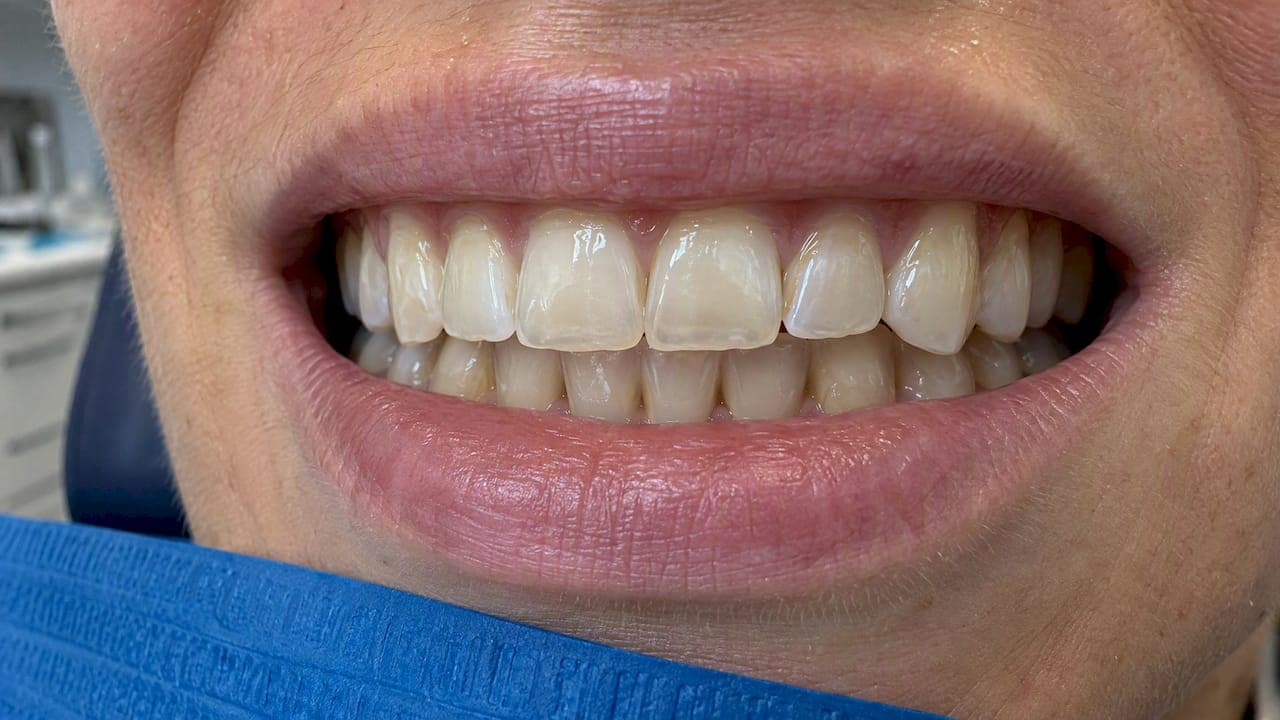
Enamel erosion is the loss of the hard outer layer of your teeth to acid, and the lost enamel does not grow back. What you can do is find the acid source, protect what is left, and have a dentist restore teeth that are already worn. The earlier you act, the simpler the fix.
This guide explains what erosion is, what causes it, how to recognize it, which home habits help, and which dental treatments are used at each stage.
TL;DR
- Erosion is acid dissolving enamel. It is not the same as a cavity, which is caused by bacteria, and the ADA describes the loss as progressive and irreversible.
- Common drivers are acidic drinks (including sugar-free ones), reflux, vomiting, and medications that dry the mouth.
- Do not brush right after acid exposure. Rinse with water, then wait 30 to 60 minutes.
- Early erosion is managed with fluoride, diet changes and gentler brushing. Advanced wear needs bonding, veneers or crowns.
- Sensitivity, yellowing, a gritty feeling or small dents on the chewing surfaces are reasons to book an exam.
Table of Contents
- What enamel erosion actually is
- What causes it
- Signs you may have it
- Can you reverse enamel erosion?
- What to do at home
- How dentists treat enamel erosion
- Our perspective
- When to see a dentist
- Get your teeth checked at Starboard Dental
- FAQ
- Sources
What enamel erosion actually is
Enamel is the outer shell of each tooth, and it protects the softer dentin underneath. Erosion happens when acids soften and dissolve that shell. According to Cleveland Clinic, you can't replace enamel once it is gone, but you can take steps to halt the damage before it worsens.
The key point is that erosion is a chemical process, not a bacterial one. The ADA defines dental erosion as acid dissolution of tooth tissue that does not involve acids made by bacteria. A cavity, by contrast, comes from bacteria that feed on sugar and produce acid in plaque. The two problems often show up together, and both thin your teeth, but they are managed differently.
Erosion is also rarely a one-step event. Acid first softens the surface (the chemical part). Chewing, grinding or hard brushing then wears the softened surface away (the mechanical part). That is why the same person can lose enamel faster than a neighbor who drinks the same soda.

What causes it
Acid has to come from somewhere. Dentists sort the sources into two groups.
Acids from outside the body
- Drinks. Soda, sports drinks, energy drinks, fruit juice, wine and flavored sparkling water. Sugar-free does not mean acid-free: diet sodas still contain acids such as citric and phosphoric acid. The ADA's guidance on dietary acids suggests drinking water with meals, not holding acidic drinks in your mouth, and using a straw so the liquid bypasses your front teeth.
- Foods. Citrus, vinegar-based dressings, pickles and sour candy. These are fine in moderation. The problem is frequency: sipping or snacking all day keeps your mouth acidic.
- Medications. Some products, such as chewable vitamin C or certain acidic syrups, are acidic themselves.
Acids from inside the body
- Acid reflux (GERD) and vomiting. Stomach acid is strong, and healthdirect notes that frequent vomiting puts it in prolonged contact with your teeth. This includes pregnancy-related morning sickness, eating disorders and conditions that cause chronic nausea.
- Dry mouth. Saliva is your natural acid neutralizer. The ADA says reduced salivary flow can increase cavities, demineralization and sensitivity. Many common medications cause dry mouth, including antihistamines and some antidepressants.
- Newer weight-loss and diabetes medications. An ADA News report from October 2025 notes that nausea, vomiting and reflux from semaglutide-type drugs are most common in the early weeks of therapy and can lower oral pH, promoting enamel erosion. If you started one of these, tell your dentist.
The mechanical partner: grinding and hard brushing
Acid-softened enamel wears faster under pressure. Clenching, grinding at night, and scrubbing with a stiff brush or abrasive paste all speed up loss. Whitening toothpastes can be more abrasive than plain ones, which matters if your enamel is already soft. If you are shopping for gentler oral care products, check labels for low-abrasion formulas and ask your dentist which ones suit your teeth.
Signs you may have it
Erosion is gradual, so the signs are easy to explain away. Look for:
- Sensitivity to cold, hot or sweet foods, as the dentin underneath becomes exposed. Our guide to tips for people with sensitive teeth covers everyday relief.
- Yellowing. As enamel thins, the yellower dentin shows through.
- Smooth, shiny spots or a glassy look on the tooth surface.
- Cupping or small dents on the chewing surfaces of the back teeth.
- Rounded, shorter-looking or slightly translucent edges on the front teeth.
- A rough or gritty feeling when you run your tongue over the teeth.
- Cracks or chips because thinner enamel is more brittle.
A quick note on that gritty feeling: it is a reason to look at your habits and have an exam, not a reason to brush harder. More scrubbing on softened enamel can make things worse.
Can you reverse enamel erosion?
Not in the sense of growing back lost enamel. Enamel has no living cells to regenerate it. Cleveland Clinic states that treatment focuses on halting progression and restoring teeth, not reversing the loss.
What is possible is remineralization of softened but not yet lost surface. Saliva carries calcium and phosphate that can harden a weakened surface, and fluoride helps that process. A systematic review of in vitro studies looked at treatment protocols that use fluoride compounds to promote a protective layer on eroded surfaces. Some research also points to casein-based (CPP-ACP) products as promising alongside fluoride, though results come largely from lab and short-term work, so ask your dentist whether it fits you rather than assuming it will rebuild enamel.
So be wary of products that promise to "regrow" enamel. The realistic goals are:
- stop the acid exposure,
- strengthen the surface that remains,
- restore the shape and cover the sensitivity of teeth that are already worn.
We cover the home side of this in more detail in our post on how to remineralize teeth.
What to do at home
Change how you drink
The biggest lever is usually frequency, not quantity. One soda with lunch is a short acid exposure. A soda sipped for three hours is a long one. Try to:
- finish acidic drinks in one sitting rather than sipping,
- use a straw positioned behind the front teeth,
- follow with water,
- choose water or milk between meals,
- eat cheese or drink milk after something acidic if you can.
Our article on the role of diet in tooth decay goes deeper on eating patterns.
Time your brushing
Dentists commonly advise against brushing immediately after acid exposure, because softened enamel is easier to scrub away. Rinse first with plain water, milk or a mild baking soda rinse (about one teaspoon in a cup of water), then wait 30 to 60 minutes before brushing. This is especially useful after reflux or vomiting, when it is better to rinse than to reach for the toothbrush.
Brush gently with the right tools
Use a soft-bristled brush, light pressure and a fluoride toothpaste. Electric brushes with pressure sensors can help if you tend to press hard. Avoid abrasive or heavily whitening pastes until your dentist has looked at your teeth.
Deal with the source
This is the step people skip. If reflux is behind the erosion, treating the reflux matters as much as any toothpaste, and that means talking with your physician. If a medication dries your mouth, ask your doctor or pharmacist whether there are alternatives, and ask us about saliva support. If you grind your teeth at night, a night guard protects what is left.
Fluoride in Maine
Fluoride in drinking water varies by town. Local reporting says the Kennebunk, Kennebunkport and Wells Water District voted in 2016 to stop adding fluoride, so local tap water may offer less fluoride protection than in some other communities. Check with your water supplier for current details, and ask us whether a professional treatment is right for you. Our post on fluoride varnish for adults explains who tends to benefit, including people with dry mouth.
How dentists treat enamel erosion
Treatment follows the stage of damage. Cleveland Clinic outlines a split between early prevention and later restoration.
| Stage | What you may notice | Typical approach |
|---|---|---|
| Early | Mild sensitivity, dull or glassy surface | Diet changes, fluoride, gentle brushing, treating the acid source |
| Moderate | Yellowing, dents, noticeable sensitivity | Professional fluoride, bonding to cover worn areas, night guard if grinding |
| Advanced | Thin, chipped or short teeth, exposed dentin, pain | Veneers, crowns or onlays to rebuild structure and protect the tooth |
Your dentist decides what fits your teeth. The stages above are a general map, not a diagnosis.
Fluoride and monitoring
For early erosion, the plan is mostly protective: professional fluoride, a prescription-strength toothpaste when appropriate, and regular exams to track whether the wear is progressing. Digital scanning, which we use at Starboard Dental, lets us record the shape of your teeth precisely so changes can be compared over time.
Composite bonding
Bonding applies tooth-colored resin to worn areas. It can cover sensitive, exposed dentin, rebuild edges and improve appearance, often with little or no removal of healthy tooth. Cleveland Clinic lists bonding among the restorative options for erosion, and its suitability depends on how extensive the damage is. A common question is whether bonding can treat enamel loss: yes, in the right cases, but it restores shape and protection rather than replacing enamel, and it can chip or stain over time. See how we use it in closing small gaps with composite bonding.
Porcelain veneers
When the front teeth are widely worn or discolored, veneers cover the visible surface with durable porcelain. They need good care to last, and our veneer maintenance guide explains the daily routine.
Crowns and onlays
When a tooth is badly worn, weak or cracked, a crown covers the whole tooth. If enough healthy structure remains, an onlay can be a more conservative choice. These two guides help you compare: onlay vs crown and crown types explained.
Night guards and bite care
If grinding contributes, a custom night guard shields teeth from further wear. Grinding and jaw pain can also be signs of TMD, which we treat.
Treating gum and decay problems alongside
Thinned enamel makes teeth more vulnerable to decay. The CDC reports that about 21% of U.S. adults aged 20 to 64 have at least one untreated cavity, so regular exams that catch decay early are part of managing erosion.
Our perspective
When patients come in worried about enamel, the first thing we want to know is not which product they use but what is happening in their day. What do they sip, what medications are they taking, do they wake up with a sour taste, do they clench? Erosion is a pattern, and a pattern needs a cause found before any filling or veneer will last.

We also see a lot of well-meant overcorrection: people who feel a rough surface and start brushing more often, with a whitening paste, right after their morning juice. We would rather you brush gently, rinse after acid, and let us look.
And we think restoration should be conservative. Bonding or an onlay that saves tooth structure is often a better first step than a full crown, as long as the acid source is under control. Our team is comfortable with anxious patients, so if you have avoided the dentist, a short visit to simply have a look is a fine place to start.
— Alex
When to see a dentist
Book an exam if you notice:
- new or worsening sensitivity to temperature or sweets,
- visible dents, shiny patches or transparent edges,
- teeth that look shorter or more yellow than before,
- chips or cracks,
- frequent reflux, vomiting or dry mouth, even without tooth symptoms.
See your physician too if reflux, nausea or an eating disorder is part of the picture, since the dentist can only protect the teeth, not stop the acid.
In Maine, you can also check for dentists through the ADA's Find-a-Dentist directory, though we hope you will consider us first.
Get your teeth checked at Starboard Dental
Starboard Dental in Kennebunk offers general dentistry exams and cleanings for patients of all ages, and a closer look at worn teeth is part of a routine visit. If erosion has already changed your teeth, we offer composite bonding and porcelain veneers, as well as crowns and other restorative care. We also offer night guards and TMD care for grinders. Ceiling-mounted TVs and personalized comfort items make visits easier for nervous patients, and we offer same-day appointments. Learn more at starboarddental.com, or read what to expect in common dental procedures for new patients.
FAQ
Can enamel grow back?
No. Enamel cannot regenerate once it has been lost. Early softening can be partly reversed through remineralization with saliva and fluoride, but worn-away enamel must be protected or restored with dental materials such as bonding, veneers or crowns.
What is the fastest way to stop enamel erosion?
Find and reduce the acid source. That may mean changing how you drink acidic beverages, treating reflux, or addressing dry mouth from medication. Rinse with water after acid exposure, wait 30 to 60 minutes before brushing, and use a soft brush with fluoride toothpaste.
Why do my teeth feel gritty?
A gritty or rough feeling can mean the enamel surface has been softened or roughened, sometimes by acid, sometimes by plaque or tartar. Avoid scrubbing harder and have a dentist check, because the right fix depends on the cause.
Can dental bonding be used to treat enamel loss?
Yes, in many cases. Bonding can cover worn or sensitive areas and rebuild shape, though how well it works depends on the extent of the damage. If the wear is extensive, veneers or crowns may be better.
Are sugar-free sodas safe for enamel?
Not entirely. They have no sugar for bacteria, but they still contain acids that can soften enamel. Drinking them quickly with a meal, and using a straw, limits the contact.
Sources
- Dental Erosion, American Dental Association
- Tooth Erosion: Stages, Causes & Treatment, Cleveland Clinic
- Dietary acids and your teeth, MouthHealthy (ADA)
- Dental erosion, healthdirect
- Xerostomia (Dry Mouth), American Dental Association
- Oral care considerations for patients using semaglutide and similar medications, ADA News
- Treatment for dental erosion: a systematic review of in vitro studies
- Cavities and tooth decay, CDC
- Water fluoridation debate, Central Maine
- ADA Find-a-Dentist, Kennebunk, Maine