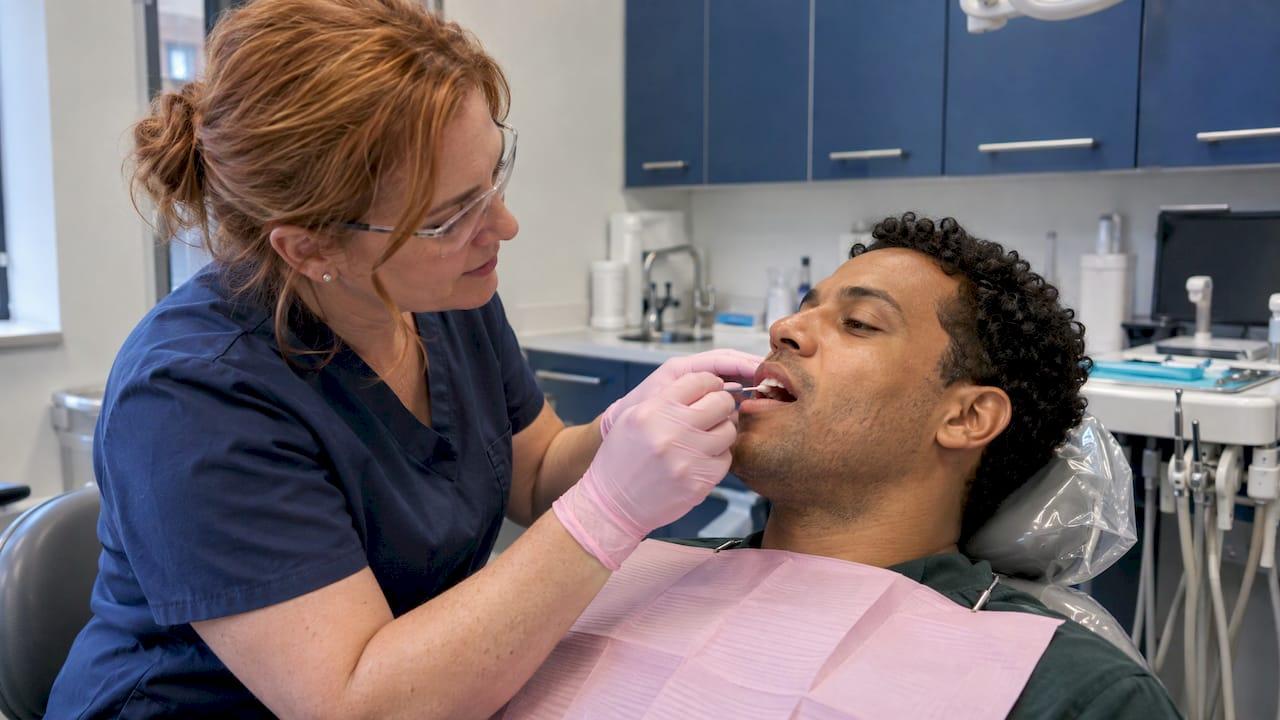
If the thought of a dental injection makes your palms sweat, you are in large company, and it is a solvable problem. The most reliable path is a dentist who takes the fear seriously, lets you set the pace, and uses the techniques that make numbing gentler. At Starboard Dental in Kennebunk, we treat patients of all ages in a welcoming, empathetic setting built to ease dental anxiety, and we offer same-day appointments so a worried patient does not have to sit with the dread for weeks.
TL;DR
- Needle fear is common, and it is a real, recognized concern, not a character flaw. Tell your dental team before the appointment, not in the chair.
- Gentler injections are a matter of technique: topical numbing gel given time to work, a slow injection, warmed anesthetic, and a reclined position.
- If you tend to feel faint around needles, say so. Lying back and a few simple muscle maneuvers help prevent fainting.
- Sedation and talk-based therapy are options to discuss, and severe phobia can be helped by a mental health professional alongside your dentist.
- Our Kennebunk office offers comfort items, ceiling-mounted TVs and same-day appointments to take the edge off the visit.
Table of Contents
- Why dental needles scare so many people
- Fear of needles, or fear of pain?
- How to prepare before the appointment
- What makes an injection gentler
- If you tend to feel faint
- Sedation and therapy: when tips are not enough
- Where this matters most: fillings, crowns and gum care
- For parents: helping an anxious child
- What to look for in a dentist if needles scare you
- Our perspective
- Make the first call easier
- FAQ
- Sources
Why dental needles scare so many people
Fear of needles is not rare. In a 2022 international survey of 2,098 adults published in PLOS One, 63.2% reported experiencing needle phobia, rating the intensity at an average of 5.7 on a 0 to 10 scale. The most common reasons were general anxiety and pain, and many respondents avoided blood draws and vaccinations because of it.
The dental chair adds its own layers. You are lying back, the injection goes into your mouth where you cannot see it, and you have little control. A 2024 study of 252 young adults in the United States found that 20.6% reported fear or anxiety related to dental procedures, and pain was the most common trigger. Needles and pain were also the most common types of fear about health care in general.
The consequences are practical. The Delta Dental Plans Association's 2025 oral health report, based on a January 2025 survey of 1,000 U.S. adults and 1,000 parents, found that 21% of adults have avoided dental care because of anxiety, and 37% of parents named fear of needles as a key contributor to their child's dental anxiety. Skipping care is how a small cavity becomes a crown or a root problem, which is exactly the situation that needs more numbing, not less.
The CDC states plainly that needle fear affects children and adults and that extreme needle fears and phobia are a real concern. Its guidance for providers is to acknowledge the fear, explain why a procedure involves a needle, and refer people with severe fears to a mental health provider. That is a sensible standard for any practice, and it is the tone you should expect from your dentist.

Fear of needles, or fear of pain?
It helps to know which one you are dealing with, because the fixes differ.
- Fear of the pinch. You expect the injection to hurt. Topical gel, slow delivery and a warmed solution address this directly.
- Fear of the sight. The needle itself, even the idea of it, is the trigger. Keeping the syringe out of your line of sight, distraction and a clear signal system matter most.
- Fear of fainting. Your body overreacts with a drop in blood pressure. Positioning and counterpressure maneuvers matter here.
- Fear of losing control. You dread being unable to stop things. A hand signal and a dentist who honors it solve most of this.
Most people have a mix. Naming yours in a sentence or two to your dentist is the single most useful thing you can do.
How to prepare before the appointment
Preparation takes ten minutes and changes the whole visit.
Tell the team when you book
When you call, say "I am afraid of needles" before anything else. The ADA News has noted that experts found when patients express their fears and anxieties, it can enhance care. A team that knows in advance can plan your visit, allow extra time and talk you through each step.
The American Dental Assistants Association's pain-control course material makes a related point: psychological support and reassurance are essential before an injection, and no single communication style fits every patient. Some people want a running commentary. Others want silence and headphones. Say which you are.
Agree on a stop signal
Raise your left hand, and the dentist pauses. Agree on this before the numbing starts. Knowing you can stop the procedure reduces the sense of being trapped, which for many people is half the fear.
Decide what you want to know
Some patients feel calmer seeing each step explained. Others do better when they do not hear the word "injection" at all. Both are fine. The same course material notes that some avoidance behaviors, such as clenching a fist, closing your eyes or holding your breath, are acceptable while the injection is given, and that patients often report afterward that it was not as bad as expected.
Manage anxiety in the days before
Anticipation is often worse than the injection. Daily habits for keeping anxiety down, such as steady breathing practice, regular sleep and limiting caffeine on appointment day, help. Trauma-informed anxiety strategies offer practical ideas you can build into your week. For appointment-specific tips, our own guide to easing dental anxiety in the chair walks through what adults can do on the day.
What makes an injection gentler
A dental injection does not have to be the sharp sting people remember from childhood. A 2026 review in the Journal of Dental Anesthesia and Pain Medicine recommends a set of best practices for minimizing injection discomfort and fainting responses: lying back in a supine position, buffering and warming the anesthetic solution, topical anesthesia, slow injection rates of about one cartridge per minute, and fine-gauge needles or computer-controlled delivery systems.
Here is what each means for you.
| Technique | What it does | What you can ask for |
|---|---|---|
| Topical numbing gel | Numbs the surface of the gum where the needle enters | Gel applied and left in place for its full working time |
| Slow injection | Slower delivery means less pressure and less sting | "Please go slowly and tell me before you start" |
| Warmed or buffered anesthetic | Reduces the burn some people feel | Ask if the team can warm or buffer the solution |
| Reclined position | Supports blood pressure and lowers fainting risk | Lie back before the injection, not after |
| Distraction | Takes your attention off the site | Headphones, a screen, a stress ball |
Give the gel time
The ADA-affiliated course material explains that the most common topical anesthetic in dental offices is 20% benzocaine gel, that it numbs only the surface tissue, not teeth or bone, and that it needs up to one minute to work. That detail matters. Gel that is wiped away after ten seconds does little. If you feel the needle before the gel has settled, say so, and ask for it to be repeated next time.
Why lying back matters
The same material notes that treating a patient reclined supine carries little risk of fainting from low blood pressure. If you are fearful, do not sit upright for the injection. Ask to be reclined first.
The relaxed-jaw trick
Tense muscles make everything feel sharper. Let your jaw hang loose, drop your shoulders and breathe out slowly as the injection starts. A longer exhale than inhale signals your body to settle down. The ADA News notes that techniques used during procedures can activate the parasympathetic nervous system, the calming side of your nervous system.
If you tend to feel faint
Fainting around needles is a physical reflex, not weakness. The 2026 review found that local anesthetic administration is the most common trigger of vasovagal syncope, a sudden drop in heart rate and blood pressure that causes fainting, in dentistry, accounting for about 75% of reported cases. It also found that refusing local anesthesia was associated with a higher syncope risk even in patients with no fainting history, which is a good reason to work on the fear rather than avoid the injection.
If you have fainted before, or feel warm, clammy, lightheaded or nauseated before an injection, tell the team right away. Practical steps include:
- Lie fully reclined before the injection starts.
- Eat a normal meal beforehand and drink water, unless told otherwise for your specific treatment.
- Tell the dentist at the first warning sign: sweating, tunnel vision, a hollow feeling in the stomach.
- Try leg crossing or leg raising with tensed muscles. The review reports that counterpressure maneuvers such as leg raising and leg crossing improved stability and aborted fainting in seven of eight patients who had early warning symptoms.
The review also cautions that anesthetics containing epinephrine may paradoxically cause low blood pressure and a slow heart rate in patients with a history of fainting. So if you have a fainting history, share it, along with your medical history and medications, so the dentist can choose the right anesthetic for you.
Sedation and therapy: when tips are not enough
For some people, gel and a gentle approach are plenty. For others, the fear is strong enough to keep them away from care entirely. Two further routes are worth knowing about.
Sedation
The 2026 syncope review notes that conscious sedation with nitrous oxide or oral diazepam is effective for moderate anxiety or a history of fainting without the risks of general anesthesia. The ADA's policies state that dentists must follow state laws and rules when providing local anesthesia, sedation or general anesthesia, and that office-based sedation may be given by a qualified dentist or another independently qualified anesthesia provider. In practice, this means rules on who may sedate you and where are set by your state, so ask any dental office what it provides and how it is regulated. Our overview of sedation dentistry types explains the options you should know about before that conversation.
Cognitive behavioral therapy
If your fear is severe, talk-based therapy can change it at the root. A 2025 narrative review in the journal Diseases found that cognitive behavioral therapy is the most widely supported psychological treatment for dental phobia, outperforming passive controls and non-specific behavioral methods, while medication-based sedation provides temporary relief without changing the underlying fear. The approach works through education, a personal ladder of feared situations, and gradual exposure, such as first just visiting the office and sitting in the waiting area, then moving on to full procedures. It often works best when the therapist and the dental team coordinate.
This is also where the CDC's guidance applies: for severe needle fear, a licensed mental health professional is the right person to see alongside your dentist. If you have a diagnosed phobia, a history of panic attacks or fainting, or fear that stops you from getting any medical care, talk with your physician or a licensed therapist as well as your dentist.

Where this matters most: fillings, crowns and gum care
The procedures that need numbing are the ones people most want to avoid, and delaying them usually makes them bigger. Cavities caught early may need only a small filling. Gum disease treatment such as scaling and root planing, a deep cleaning below the gumline, usually involves numbing. Crowns, bridges and implants do too. Regular exams and cleanings catch problems while they are small. Our guide on how dentists spot early decay explains what early detection looks like, and why consistent dental care matters shows what delay can cost you.
If you have been away from the dentist for a while because of fear, you are not behind in any way that matters. A first visit can be only an exam and a conversation. Our dental checkup walkthrough shows what to expect, step by step, and common procedures for new patients explains which treatments involve numbing and which do not.
For parents: helping an anxious child
Among parents surveyed by Delta Dental, needle fear was one of the leading contributors to a child's dental anxiety. The CDC advises that family members can role-play and practice procedures at home with a child who has difficulty understanding what will happen. Keep your language simple and honest, avoid saying "it won't hurt" if you cannot be sure, and describe sensations: a pinch, then a sleepy, tingly feeling. If you are planning a first visit, our guides to the right age for a first dental visit and pediatric dentistry for parents will help you prepare.
What to look for in a dentist if needles scare you
A good fit shows up in how the office handles the first phone call. Look for:
- A team that does not minimize your fear and asks what you need.
- A willingness to explain each step and to pause on your signal.
- An environment designed for comfort, with distraction and personal comfort items.
- Flexibility with scheduling, so you are not left stewing for weeks after you finally decide to go.
- Modern tools that reduce time in the chair and the number of uncomfortable steps.
Our own take on comfort items is covered in how comfort items help reduce anxiety.
Our perspective
We hear it often: "I'm not afraid of the dentist, I'm afraid of the needle." We take that seriously. Fear is not something to talk a patient out of; it is something to plan around.
Our approach starts with the setting. We built a warm, welcoming practice where patients of all ages are met with empathy, and we offer personalized comfort items and ceiling-mounted TVs so your attention has somewhere else to go. We use digital scanners for precision, which means less guesswork on restorative work. And because waiting makes dread grow, we offer same-day and walk-in appointments.
Our advice to every nervous patient is the same: tell us what scares you before you sit down. We would much rather adjust the plan than have you skip the care you need. Whether you need a checkup, a filling, a crown or help with grinding and jaw pain, we want the visit to be one you can face next time.
Alex
Make the first call easier
If you live in or near Kennebunk and needles are what has kept you from the dentist, start with one simple step: call us, tell us about the fear, and book a visit. Whether you need general dentistry such as an exam and cleaning, or restorative care for a tooth that has been bothering you, we will go at your pace. Same-day and walk-in appointments are available, so you do not need to wait.

You can see the full list of what we offer, from fillings and night guards to cosmetic work and clear aligners, on our services page, or start from our home page.
FAQ
How do I tell my dentist I am afraid of needles?
Say it plainly when you book and again when you arrive: "I am afraid of needles and I need you to go slowly." Ask for topical gel with its full working time and agree on a hand signal to pause. A good dental team will welcome this information, because patients who express their fears tend to get better care.
Is there a way to get dental work done without a needle?
Topical gel numbs only the surface of the gum, so it will not numb a tooth for most treatments. Some procedures, such as exams, cleanings and many whitening services, do not need an injection at all. For treatments that do, a dentist can discuss gentler delivery, sedation options and what is appropriate for your situation.
What if I feel faint during an injection?
Tell the team at the first sign: warmth, sweating, lightheadedness or nausea. Being reclined helps, and tensing and crossing your legs can help prevent a faint. Mention any history of fainting beforehand so your dentist can plan the injection and choose the anesthetic accordingly.
When should I see a therapist about needle fear?
Consider it if the fear makes you avoid dental or medical care altogether, brings on panic attacks, or has led to fainting. The CDC advises referring people with severe needle fears to a mental health provider. Cognitive behavioral therapy is the best-supported talk-based treatment for dental phobia, and your dentist can work alongside it.
Sources
- Prevalence, causes, impacts, and management of needle phobia, PLOS One, 2022
- Exploring young adults' fears related to healthcare and dental procedures, 2024
- State of America's Oral Health and Wellness Report, Delta Dental Plans Association, 2025
- Healthcare Providers: Understanding Needle Fears and Phobia, CDC
- Addressing dental fear through communication adjustment, ADA News
- The Fundamentals of Pain Control in Today's Dental Practice: Local Anesthesia
- Syncope in dentistry: risk factors and preventive strategies, JDAPM, 2026
- Reframing Dental Anxiety: Cognitive Behavioral Therapy, Diseases, 2025
- Current Policies, American Dental Association